





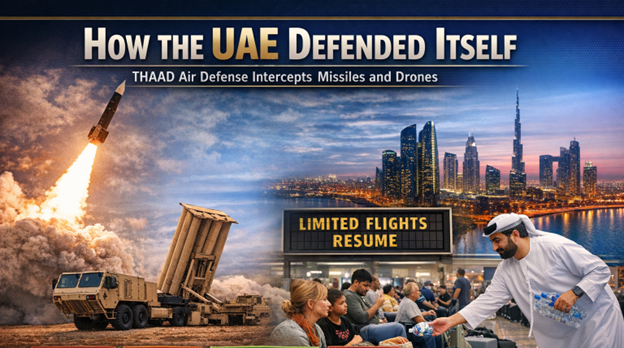
March 2026 – UAE : The United Arab Emirates faced one of the largest aerial attacks in the region. Hundreds of drones and missiles were launched toward the country during the recent escalation. Most of them were intercepted by advanced air defence systems before they reached cities like Dubai and Abu Dhabi.
Officials confirmed that the majority of incoming threats were destroyed in the air. Defence systems prevented major damage and protected millions of residents and visitors.
One of the key reasons for this high level of protection was the UAE’s advanced air defence network, including the Terminal High Altitude Area Defense (THAAD) missile defence system. Only a few countries in the world operate this system, and it is considered one of the most advanced missile defence technologies available. It is designed to intercept ballistic missiles at high altitude before they reach their targets
Despite the attacks, daily life continued. Businesses stayed open, and authorities worked to keep residents and tourists safe.
Hundreds of Missiles and Drones Intercepted
According to official defence reports, the UAE intercepted most missiles and drones launched toward the country.
Reports indicate that hundreds of missiles were launched toward the UAE, but none directly struck populated areas inside the country. This level of interception demonstrates the strength of the country’s layered defence systems, which track and neutralise threats in real time.
According to defence updates and regional coverage, hundreds of drones were also detected, and about 94 percent of them were intercepted before impact. Only a small number entered UAE airspace, resulting in limited damage and very few casualties compared to the country’s population of more than ten million people.
According to Khaleej Times Recent figures show:
- 165 ballistic missiles were detected since the start of the attack.
- 152 were destroyed.
- 13 fell into the sea.
- 2 cruise missiles were detected and destroyed.
- 541 Iranian drones were detected.
- 506 were intercepted and destroyed.
- 35 fell within the country, causing material damage.
- On the morning of the second day of the attack, 20 ballistic missiles were destroyed while eight fell into the sea. Two cruise missiles and 311 drones were also destroyed.
- 21 drones struck civilian targets.
- These numbers show that most threats were stopped before reaching populated areas
Advanced Air Defence Systems Protect the UAE.
THAAD does not work alone. It is part of a layered defence network that includes other air defence systems and radar technologies, allowing the UAE to respond to different types of threats at different altitudes.
UAE air defence systems have been actively tracking and intercepting incoming threats. Officials confirmed that many ballistic missiles, cruise missiles, and drones were detected and destroyed.
Gulf NEWS Reports show:
- Ballistic missiles intercepted
- Cruise missiles destroyed
- Hundreds of drones neutralised
- Limited damage reported
- A few casualties caused by debris
Because THAAD can track multiple targets at once and respond within seconds, it is especially effective during large-scale attacks involving many missiles or drones. Defence experts often describe it as a strategic shield because it protects not only cities but also airports, energy facilities, and key infrastructure.
Safety Measures Inside the Country
While the country defended itself from the outside, authorities also focused on safety measures inside the UAE. Residents were advised to avoid large public gatherings, and many people were given the option to work remotely for several days.
Emergency alert systems were activated to keep residents informed. If any risk was detected, people received alerts directly on their mobile phones in their preferred language. These alerts helped people stay aware and respond quickly if needed
The UAE also took strong safety steps inside the country.
Authorities:
- Advised against large gatherings
- Allowed remote work
- Increased monitoring
- Activated emergency alerts
- Sent safety messages to residents
These measures helped maintain calm and order across the country.
Support for Tourists and Travelers
Tourists in the UAE were also supported during the disruption, especially when flights were temporarily suspended. Thousands of travellers were stranded at airports, and authorities worked quickly to assist them. At airports, travellers were provided with food, water, and safe waiting areas free of charge.
Reports confirm:
- Around 20,000 passengers were affected
- Free meals were provided
- Temporary accommodation arranged
- Flights rescheduled
- Hotels asked to extend stays
The government confirmed that hotels were asked to extend tourist stays, and the cost would be covered.
This helped ensure tourists remained safe and comfortable during the disruption.
Flights Gradually Resuming
Flight operations across the UAE are slowly returning after temporary airspace closures. Airports had suspended flights due to safety concerns during the escalation.
Limited flights have now resumed at major airports including Dubai International Airport.
Airlines such as Emirates, Etihad Airways, and flydubai have restarted selected services.
Passengers are advised:
- Confirm flights before travel
- Do not go to the airport without a booking confirmation
- Expect delays or changes
- Follow airline updates
Passengers are advised to confirm their flights before going to the airport.
More details about flights can be found with the help of UAE airlines resume limited flights
Officials say full normalisation depends on regional stability.
Public Safety Remains a Priority
Despite the tension, law and order remained strong across the country. Restaurants stayed open, hotels continued operating, and daily life went on in most areas. Officials emphasised that this conflict was not between communities, noting that hundreds of thousands of Iranians live peacefully in the UAE. Authorities highlighted the importance of unity and stability while continuing to focus on safety and recovery.
Authorities say safety remains the top priority. Emergency teams remain on standby across the country.
Despite the attacks:
- Restaurants remain open
- Hotels remain open
- Businesses continue
- Public services operate normally
Officials say the UAE remains stable and secure.
Warning Against Misinformation
Authorities warned residents not to spread false information online. Misinformation can cause panic and confusion.
Residents are advised to:
- Follow official sources
- Avoid rumours
- Verify information
- Stay calm
Officials continue monitoring online activity to prevent false reports.
Although the situation created concern, the UAE’s response showed how preparation and coordination can reduce risk during a crisis. With strong defence systems, clear communication, and support for residents and tourists, the country managed to maintain stability during a difficult time. Officials continue to monitor the situation closely, while flights gradually resume and normal activity returns across the UAE.
